A kitchen island can transform how your whole home feels. Done right, it adds prep space, storage, seating, and a natural center of gravity for the room. Done wrong, it blocks every traffic path and leaves you squeezing past appliance doors like you’re navigating an obstacle course.
These kitchen island ideas will help you figure out what’s worth doing, what to skip, and how to plan something that fits your kitchen and your life.
If you’re eyeing a full kitchen remodel or just trying to squeeze more utility out of the space you have, this is a solid place to start.
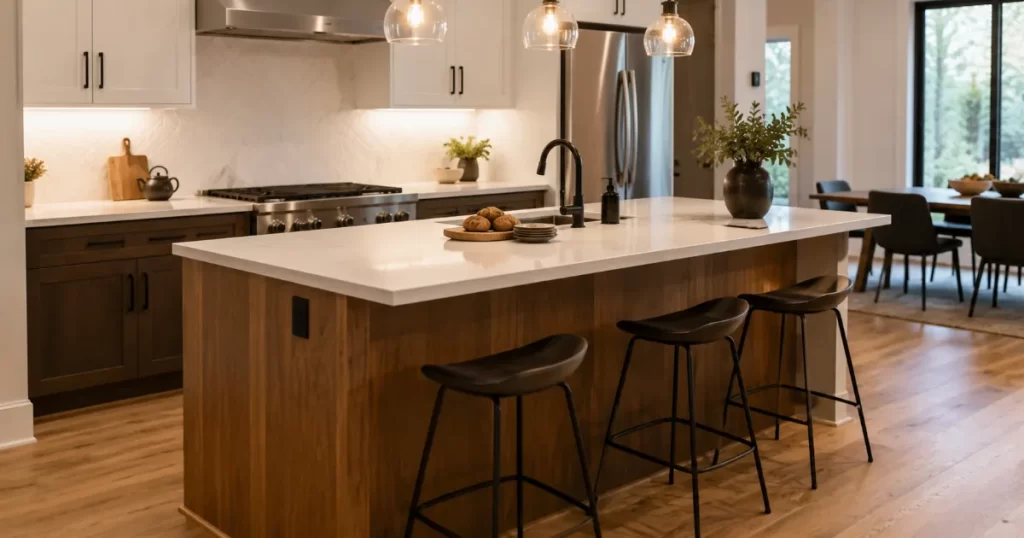
1. Nail the Sizing Before Anything Else
Everything else is secondary. The National Kitchen and Bath Association recommends at least 42 inches of clearance on all sides of an island in a single-cook kitchen, and 48 inches if more than one person regularly uses it. Get this wrong, and no design feature saves you.
For smaller kitchens, a 3×3-foot island is usually the floor. Anything smaller tends to create more problems than it solves.
If you’re working with a tight layout, a rolling cart or a peninsula might serve you better.
2. Add a Prep Sink
If you do any serious cooking, a prep sink on the island is one of those features you’ll wonder how you ever lived without.
Filling pots, rinsing produce, and keeping dirty dishes out of the main sink area while you’re entertaining guests becomes so much smoother.
You don’t need a large basin. A small single-bowl sink does the job. The main thing is getting the plumbing roughed in early, before the countertop goes down.
3. Go Deep on Storage
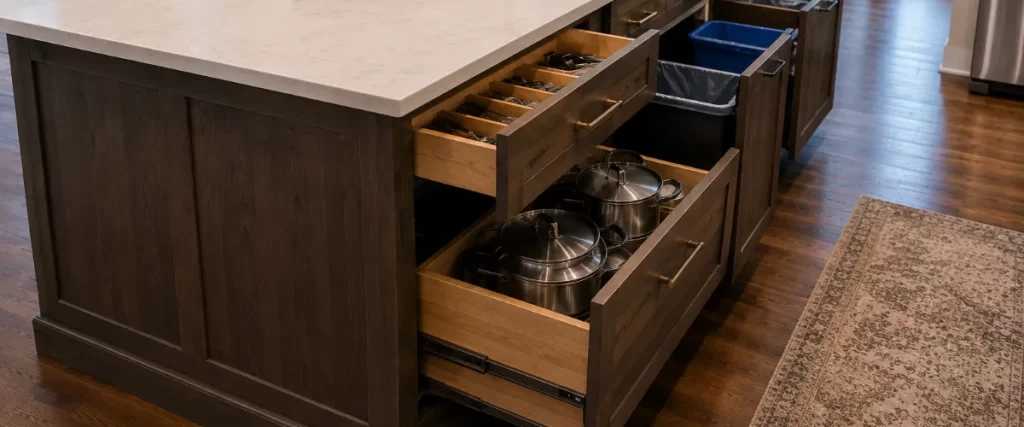
Standard cabinets are 24 inches deep. Deep drawers on a kitchen island can extend to 30 inches or more, meaning pots, pans, and small appliances that never seem to have a home finally have one.
It’s one of those practical upgrades that pays off every single day.
A few storage ideas worth building in:
- Deep bottom drawers for cast iron, dutch ovens, and sheet pans
- Pull-out trash and recycling bins
- Open shelving on one end for cookbooks or display
- A wine or beverage fridge in the base
4. Build A Breakfast Bar
An island with seating changes how the whole family uses the kitchen.
Kids do homework there. Guests hang out while you cook. It becomes the casual dining area for quick meals without requiring a separate dining table.
The math is simple: 12 inches of overhang for a standard bar stool, 15 to 18 inches for more comfortable seating. You need about 24 inches of width per person, so a 6-foot island can seat three people comfortably.
5. Match the Island Shape to Your Kitchen Layout
The island style that looks great in a magazine photo might completely wreck your kitchen’s traffic flow. That’s why it needs to match your kitchen layout, not just your design style.
| Kitchen Layout | Recommended Island Style |
| U-shaped kitchen | Smaller island, centered, keeps clearance on all sides |
| L-shaped kitchen | Longer rectangular island along the open side |
| Galley kitchen | Skip the fixed island, use a rolling cart instead |
| Open floor plan | Large island anchors the kitchen to the living spaces |
A U-shaped kitchen is already generous on counter space, so the island’s main job is usually seating and extra storage.
Meanwhile, an open floor plan is a different situation entirely, as the island becomes the visual and functional divider between the kitchen and the rest of the room.
6. Use Pendant Lights to Define the Space
Pendant lights do two things at once: they add direct task lighting over your prep area, and they make the island look like a deliberate design decision rather than something that got dragged in.
The bottom of the pendants should sit about 30 to 36 inches above the countertop.
Three pendants over a long island look intentional. Two over a shorter one works fine. Just keep the scale proportional, as oversized pendants on a small island look off-balance and can actually make the room feel smaller.
7. Consider Appliance Access Seriously
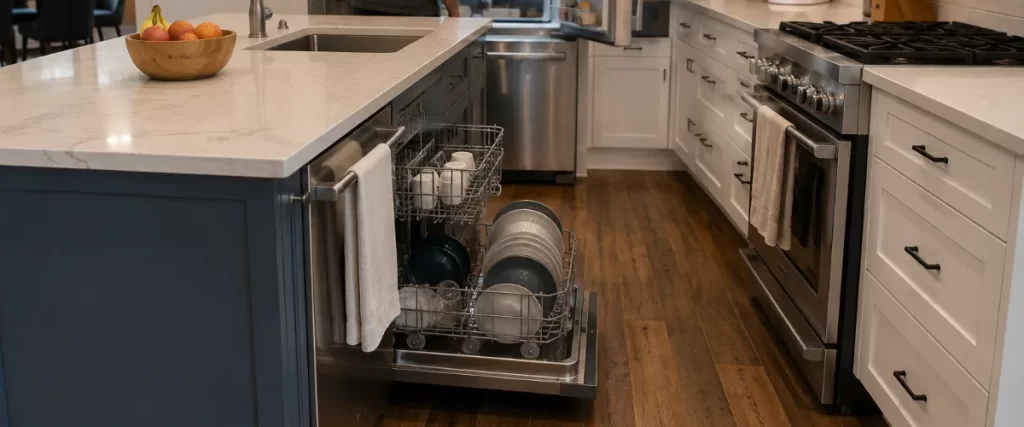
Where is the fridge in relation to the island? If someone pulls the fridge door open while another person stands at the island, is there a collision? What about the dishwasher?
Appliance doors need clear swing room. It sounds obvious, but it rarely gets thought through until the kitchen is already installed.
During a kitchen remodel, a good contractor catches these problems in the planning stage, which saves a lot of grief later.
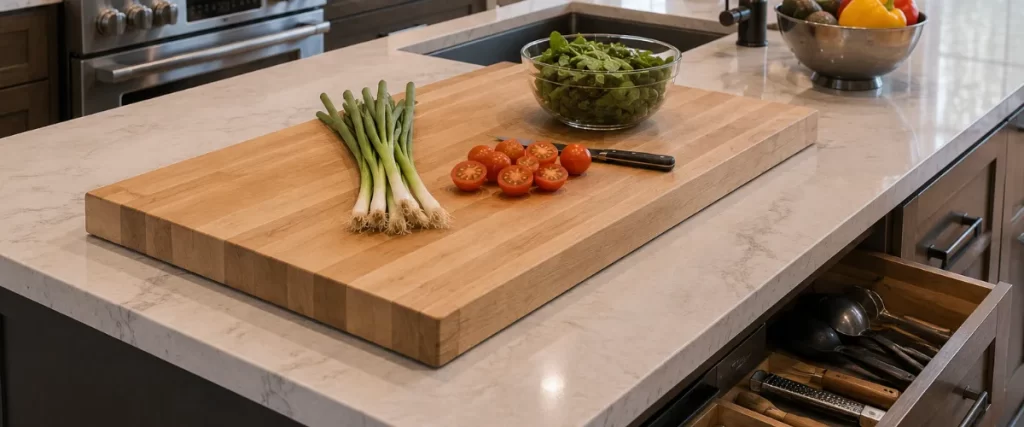
8. Turn It Into a Dedicated Prep Station
A kitchen island works best when it has one clear primary job. For most people, that’s food prep.
A butcher block on one end, solid lighting above, and drawers stocked with prep tools keep the island purposeful instead of a dumping ground for mail and random stuff.
For a large family, a dedicated prep station means two people can work simultaneously without getting in each other’s way. That alone can justify the investment.
9. Pick Seating That Actually Fits the Counter Height
Not all barstools work with every island height.
Standard counter height is 36 inches, so pair it with stools that are 24 to 26 inches tall. On the other hand, the bar height is 42 inches, so use stools that are 28 to 30 inches.
Backless stools tuck neatly under the overhang when not in use, keeping the kitchen from feeling cramped. Backed stools are more comfortable for longer meals, but take up more floor space. Which one is right depends on how you actually use the island day to day.
FAQ: Kitchen Island Ideas
How much does it cost to add a kitchen island?
It depends heavily on size, materials, and whether plumbing or electrical work is involved. A basic freestanding island can run $500 to $2,000. A custom built-in island with a prep sink and deep storage typically starts around $4,000 and can go well above $10,000.
Do I need a permit to add a kitchen island?
If it’s freestanding, usually not. If it involves plumbing, gas lines, or permanent installation, a permit is almost certainly required. Requirements vary by city and county, so check with your local building department before you start any work.
What’s the minimum kitchen size for a fixed island?
Most designers suggest at least 150 to 200 square feet of kitchen space before committing to a permanent island. In smaller kitchens, a rolling cart gives you the prep space and storage without permanently reducing your floor space.
Can I add a cooktop to my kitchen island?
Yes, and it’s a popular choice. It requires ventilation overhead, so you’ll need to plan for a range hood or a downdraft system. The layout works especially well when the island faces an open living area, so the cook can interact with guests.
What countertop material is best for a kitchen island?
Quartz is popular for its durability and low maintenance. Butcher block adds warmth and is great for food prep. Marble looks stunning but needs more care. The right pick depends on how you use the island and your overall kitchen design direction.
Gathering Ideas Is Only the Beginning
Picking through kitchen island ideas is the fun part. The hard part is making sure the sizing, plumbing, lighting, seating height, and traffic flow all work together, and that the finished result fits how you live.
If you’re ready to start building, our team at Gill Construction handles every part of the process, from layout to the last detail. Call us at or message us here, and let’s talk about what your kitchen could look like.