Your bathroom was probably designed for someone in peak physical condition, with high tub walls, round knobs that require a full grip to turn, and floors that get dangerously slippery when wet.
As life changes, those small inconveniences become real hazards.
These aging-in-place bathroom features are worth prioritizing: a curbless or low-threshold shower, properly anchored grab bars, non-slip flooring, a comfort-height toilet, lever-style faucets, and task lighting that reaches every corner.
Why You Should Address The Shower First
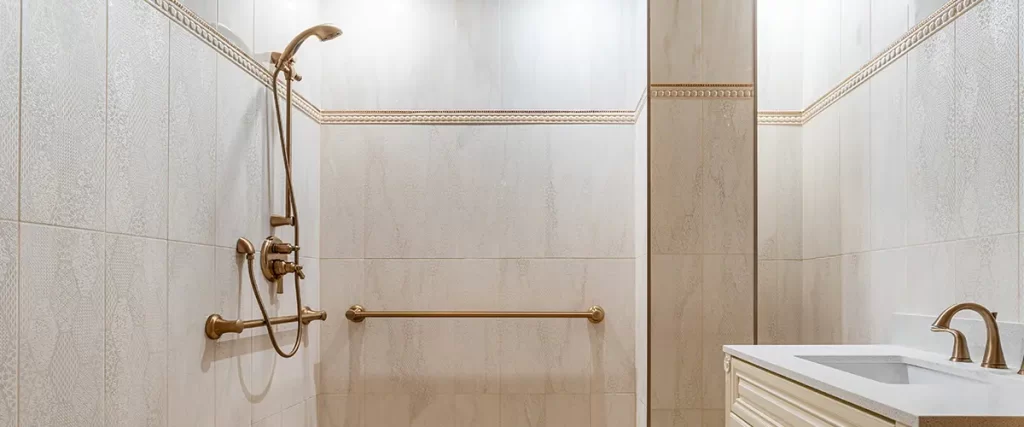
According to the CDC, falls are the leading cause of injury for adults aged 65 and older. Replacing a traditional tub with a walk-in shower or a curbless shower significantly reduces that risk.
A few things make these showers genuinely work well for aging in place:
- A built-in bench on the side wall so someone can shower seated without needing a portable seat that slides around
- A handheld showerhead on an adjustable slide bar so the water comes to where you are, however you’re positioned
- A low-threshold entry, preferably under two inches, or flush with the floor, for anyone using a walker or wheelchair
If someone in the household genuinely loves a good soak, a walk-in tub with a sealed interior door is a reasonable option.
Many include heated seats and air jets, which make them comfortable well beyond their safety benefits. That said, most people end up preferring the curbless shower once they’ve actually used one.
Aging-in-Place Bathroom Features: A Side-by-Side
Here’s a snapshot of the most common aging-in-place bathroom upgrades, what problem each one solves, and roughly how involved they are to add:
| Feature | What It Addresses | Project Complexity |
| Curbless or low-threshold shower | Tub entry fall risk | Moderate |
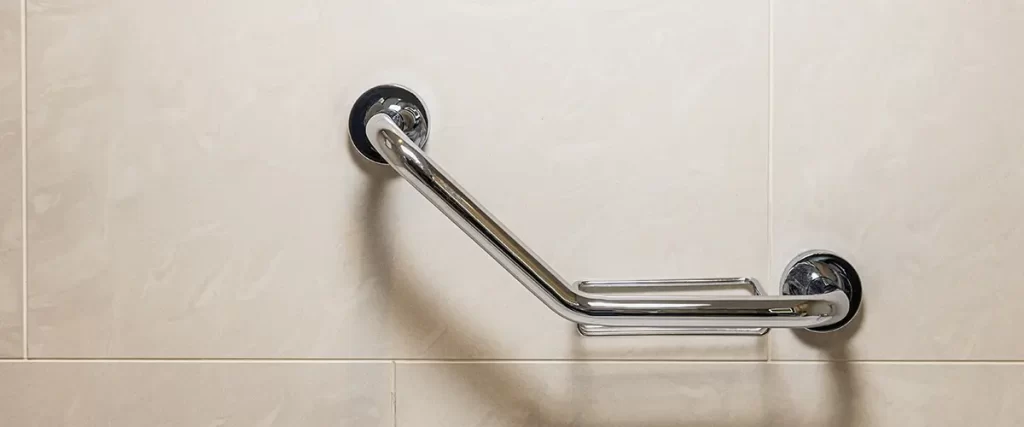
| Grab bars | Balance support in wet areas | Low |
| Comfort height toilet | Difficulty sitting and standing | Low |
| Non-slip flooring | Wet-surface falls | Low–Moderate |
| Lever-style faucets | Grip and arthritis limitations | Low |
| Pocket doors or swing-clear hinges | Tight spaces, door-swing hazard | Low–Moderate |
| Wider doorways | Walker and wheelchair access | High |
| Task lighting | Shadow zones that hide obstacles | Low–Moderate |
Installing grab bars is consistently one of the highest-return changes in this whole category.
The design options have improved significantly over the years, and you can find styles in matte black, brushed nickel, or brushed gold that look completely intentional next to standard fixtures.
Floors, Faucets, and Other Details That Matter
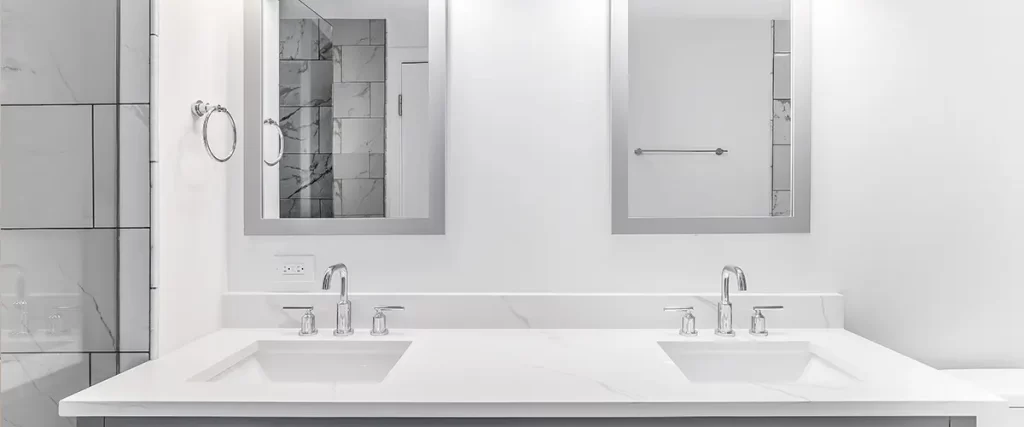
Non-slip flooring should cover the entire bathroom, not just the shower.
Textured porcelain tiles with slip-resistant ratings look entirely normal and work well in any bathroom style. Smaller tiles with tighter grout lines naturally create more traction without any visual trade-off.
Lever-style faucets at the sink are a low-cost change with real payoff for anyone dealing with arthritis or reduced hand strength. The same logic extends to pocket doors, which eliminate the swinging-door hazard entirely in tight spaces and also free up floor space.
Comfort-height toilets sit a few inches taller than standard models, making sitting down and standing up considerably easier. Pair that with a grab bar on the adjacent wall, and you’ve addressed one of the most frequently overlooked trouble spots in the room.
Lighting deserves more attention than it usually gets in these conversations. Task lighting directly above the toilet, shower, and vanity eliminates the shadow zones that turn ordinary navigation into guesswork in the middle of the night. Motion-activated options are worth the slightly higher cost for anyone who gets up in the dark regularly.
These upgrades fall under what architects and occupational therapists call universal design principles, a framework for building spaces that work well across a wide range of abilities and life stages.
If you’re still in the research phase, our blog on the bathroom remodeling process walks through what to expect from demo day through the final walkthrough.
But before you hire anyone, it’s worth going through our guide on questions to ask a contractor before your bathroom remodel, so you know what to look for and what to avoid.
Frequently Asked Questions
How wide does a doorway need to be to accommodate a walker or wheelchair?
For a wheelchair, 36 inches is the recommended minimum, since that nominal width provides the 32-inch clear opening required by accessibility standards. Widening doorways is one of the more involved upgrades on this list, but it’s a one-time structural change that pays off.
Are grab bars and towel bars interchangeable?
No, and the difference matters. Towel bars are mounted to drywall anchors designed to hold a damp towel. Grab bars are anchored into wall studs or reinforced blocking and rated to support a person’s full body weight during a fall. Using a towel bar as a grab point is a common and genuinely dangerous mistake.
We Can Take It From Here
If you’d rather hand off this project to a team that handles bathroom remodels regularly, that’s exactly what Gill Construction does. We handle everything from the initial design and renderings through final installation, with a 5-year workmanship warranty.
To see what’s possible for your space, check out our bathroom remodeling services. When you’re ready to move forward, call us at or message us here.