Your bathroom floor gets wet every single day. Steam, splashes, and the puddle that always forms outside the shower all add up.
Pick the wrong material, and you’re looking at warped planks, cracked grout, or worse, mold creeping under the surface before you even notice it’s there.
The good news is that a few options handle all of that extremely well. Here’s how the most popular bathroom flooring choices actually compare.
Your Main Bathroom Flooring Options, at a Glance
| Flooring Type | Water Resistance | Durability | Maintenance |
| Porcelain tile | Excellent | Very high | Low |
| Ceramic tile | Very good | High | Low to moderate |
| Luxury vinyl plank (LVP) | Excellent | High | Very low |
| Natural stone | Good (with sealer) | High | High |
Porcelain and Ceramic Tile
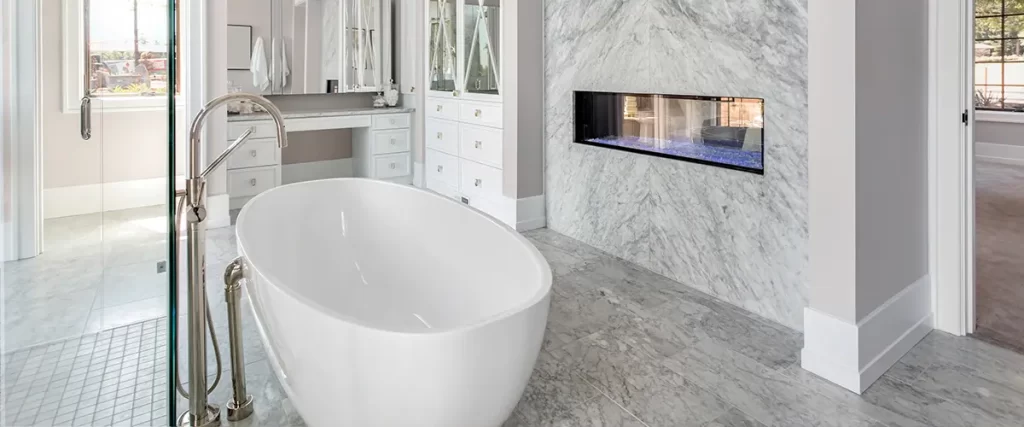
Porcelain is fired at higher temperatures than ceramic, which makes it denser and less porous. In a bathroom, that density means moisture stays on the surface rather than being slowly absorbed into the material.
Ceramic is still excellent for most bathrooms. It just needs closer attention to grout maintenance over time.
Grout is where tile floors win or lose in wet spaces. Well-sealed grout keeps moisture out. Neglected grout becomes a pathway for water to quietly reach the subfloor.
Large-format tiles reduce the total number of grout lines, making long-term moisture control easier and cleaning less of a chore.
If you’re in Central Texas, where hard water is part of everyday life, there are a few extra considerations for tile and grout upkeep. Our post on how hard water impacts your bathroom remodel walks through which materials hold up best and what to watch for.
Luxury Vinyl Plank (LVP)
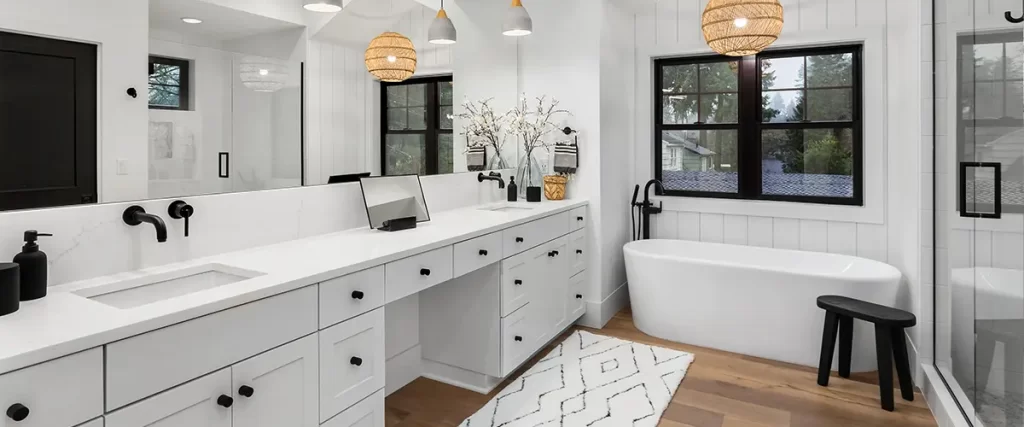
Today’s LVP is built with a composite core that resists swelling when wet, a printed surface layer that looks convincingly like wood or stone, and a wear layer on top that handles real daily use.
LVP’s long-term performance is determined by installation quality. Tight seams and properly finished edges around the tub, toilet base, and walls are where the difference between a 20-year floor and a 5-year floor gets made.
A well-installed LVP floor holds up in bathroom conditions without ever needing to be sealed.
Things homeowners tend to appreciate about luxury vinyl plank:
- Warmer and softer underfoot than tile, which you notice every morning
- No special cleaners or sealing required, just regular mopping
- Significant cost savings compared to tile installation or natural stone
Natural Stone
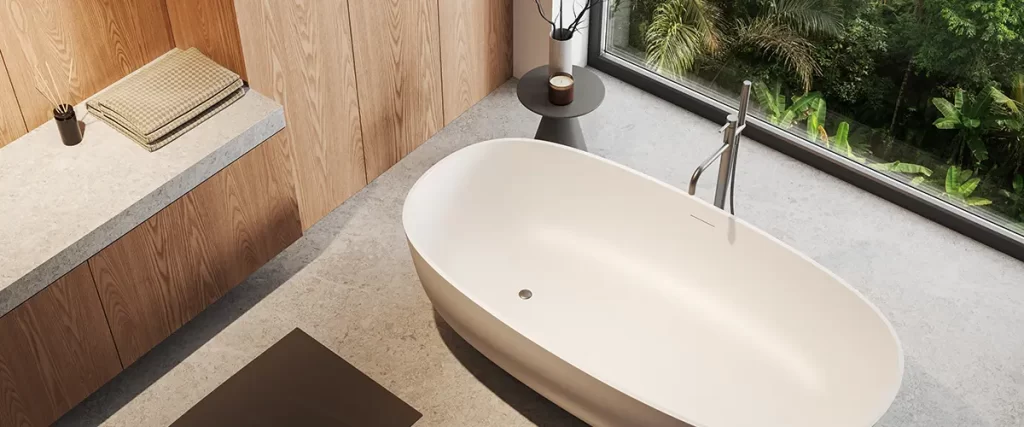
Marble, travertine, and slate have a character that manufactured flooring simply can’t replicate. The veining in a marble tile, the raw texture of slate, or the earthy warmth of travertine is simply one-of-a-kind.
The tradeoff is maintenance, and it’s worth being honest about that upfront.
Natural stone is porous, and bathrooms keep floors wet daily. Without a high-quality sealer applied consistently, moisture seeps in over time.
The EPA’s guide to mold and moisture in the home explains why porous surfaces in bathrooms need real, ongoing attention. Most stone floors need resealing every 6 months to 1 year, and heavily used bathrooms may need it annually.
Cleaning products matter, too. Many standard bathroom sprays are acidic and will etch a polished stone surface over time. Stone floors perform best for homeowners who find maintenance satisfying rather than burdensome, and they reward that care for decades.
If you’re weighing marble vs. granite for your bathroom surfaces, our comparison of granite vs. marble breaks down the practical differences that matter in day-to-day life.
Frequently Asked Questions
What is the best flooring for a bathroom?
Porcelain tile is the most dependable choice for moisture resistance and longevity. It handles bathroom conditions well and can last the lifetime of the home when installed correctly. Luxury vinyl plank is the practical runner-up for homeowners prioritizing budget and easy maintenance.
Is luxury vinyl plank actually waterproof in a bathroom?
The plank material itself is waterproof. What determines performance is how tightly it gets installed. Properly sealed seams and finished edges prevent water from reaching the subfloor, and a well-installed floor handles bathroom moisture reliably for 15 to 25 years.
How often does natural stone need to be sealed in a bathroom?
Most stone floors need resealing every 1 to 2 years. Bathrooms that see heavier use may need it annually. The specific stone type and cleaning routine both factor into the schedule.
What bathroom flooring should I avoid?
Carpet, solid hardwood, and non-waterproof laminate all absorb moisture over time. That moisture leads to mold growth, subfloor damage, and a replacement project that could have been avoided with the right material from the start.
Why Not Let Someone Else Handle This Part
Choosing flooring is one decision in a bathroom remodel. Subfloor preparation, waterproofing systems, layout planning, and installation all have to come together correctly for the floor to actually perform the way it’s supposed to.
At Gill Construction, we handle the full process across Bell County, Texas, from material selection through the final tile set.
When you’re ready to move from research to results, take a look at our bathroom remodeling services and get in touch. Call us at or message us here.