Most bathroom remodels take anywhere from 3 to 10 weeks, depending on the scope of work. That’s the honest answer.
A simple powder room refresh? Maybe three weeks. A full gut renovation with custom tile, new plumbing lines, and heated floors? You’re looking at two to three months, sometimes more.
What makes a bathroom remodel timeline tricky is that no two projects are the same. The size of the space, the condition of your existing plumbing and electrical systems, and how prepared you are going into it all play a role.
So let’s walk through what actually happens, week by week, so you know what to expect before demolition day.
The Pre-Construction Phase
Before a single wall stud is exposed, there’s planning work that can take 2 to 6 weeks on its own.
This is the design phase, where you’re selecting tile, fixtures, light fixtures, vanities, and finalizing your layout. If you’re working with an experienced contractor, they’ll help you lock in a design plan early, so you’re not making decisions mid-project (which causes costly delays).
Permits are part of this phase, too. Depending on your city, pulling necessary permits can take a few days or a few weeks. Projects that involve moving plumbing, rerouting electrical, or moving walls almost always require a permit, and skipping this step is never worth it.
Getting this phase right is what separates a smooth project from a construction zone nightmare.
The Construction Phase: Week-by-Week
Once permits are in hand and your materials are ordered, the actual construction begins. Here’s a realistic look at how it typically unfolds:
Week 1: Demo and Rough-In
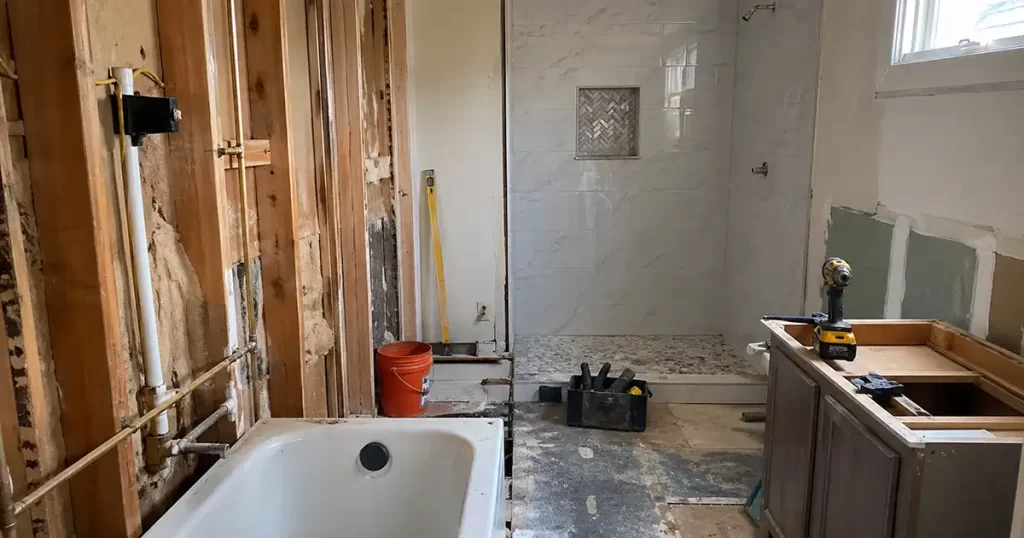
The old bathroom comes out first. That means removing the old tile, fixtures, and sometimes drywall down to the wall studs.
After the demo, the rough-in phase begins. This is where plumbers and electricians do their work before anything gets closed up.
Rough-in work covers:
- Running new plumbing lines
- Updating or moving the electrical panel connections
- Installing subfloor prep if you’re adding heated floors
- Any structural work if walls are being moved
Rough-in is also when the city inspector typically does their first visit. No one can move forward until that inspection passes.
Week 2: Drywall, Waterproofing, and Backer Board
Once the rough-in is approved, the walls go back up.
In wet areas, waterproofing membranes and cement backer board go in before any tile installation begins. This step protects structural integrity over the long term. Rushing it is one of the most common mistakes homeowners see come back to bite them years later.
Weeks 2–4: Tile Installation
Tile work is slow by nature, and it’s often the longest part of the construction phase. Large format tiles, intricate patterns, and custom elements all add time.
A standard shower and floor might take four to six days just for setting and grouting, and then the tile needs time to cure before anything else happens.
Week 4–5: Installation Phase
This is the exciting part. New flooring gets finished, vanities go in, new fixtures are set, light fixtures are mounted, and towel bars find their spots. If you’ve got a complex shower system or custom elements, this stage might take longer than most homeowners expect.
Week 5–6 (or later): Final Walkthrough
The final walkthrough is where your contractor goes through every detail with you. Before that happens, a final inspection from the city inspector signs off on plumbing and electrical work.
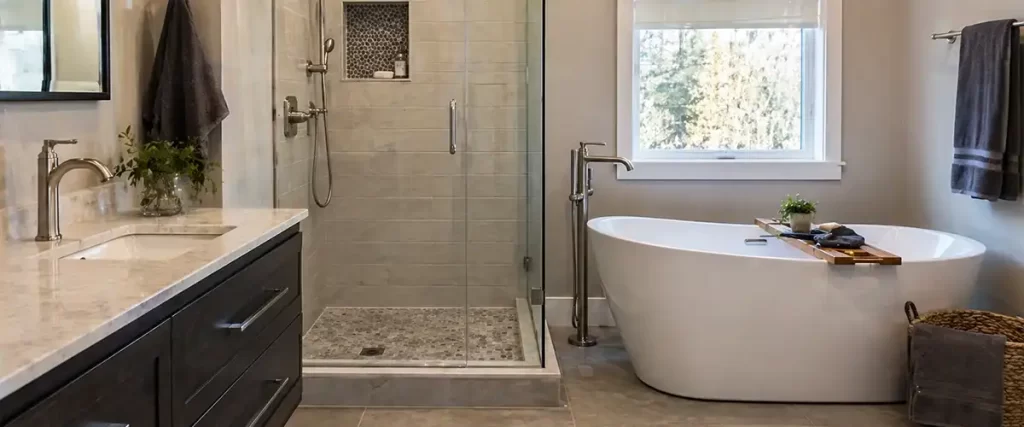
Then, it’s your turn to look at every corner of your new bathroom before officially calling the project complete.
Bathroom Remodeling Timeline by Project Type
Here’s a rough breakdown of how bathroom renovation timelines compare:
| Project Type | Estimated Timeline |
| Powder room refresh | 1–3 weeks |
| Small bathroom cosmetic update | 2–4 weeks |
| Full bathroom remodel (no layout change) | 4–6 weeks |
| Full gut renovation with layout changes | 6–10 weeks |
| Large bathroom, custom elements | 10–14 weeks |
These ranges assume materials are ordered on time, permits come through without issues, and there are no surprises inside the walls.
Malfunctioning plumbing, mold, or outdated electrical systems discovered mid-project can add 1 to 3 weeks to any of these timelines.
What Causes Delays (And How to Avoid Them)
Unexpected delays are part of almost every renovation process, but smart planning can reduce how often they happen and how bad they are when they do.
The biggest delay culprits:
- Late material orders. Tile, vanities, and fixtures ordered after demo day instead of before it.
- Permit delays. Some cities take two to three weeks to review applications.
- Discovering problems. Outdated plumbing, water damage behind walls, or undersized electrical panels.
- Change orders. Changing your mind mid-project on tile or layout adds both time and cost.
The best way to protect your project timeline is to make every decision before construction starts. A good project manager will lock in your selections early and schedule site visits at key milestones so nothing falls through the cracks.
Working with licensed professionals matters here, too. A qualified contractor knows how to sequence the construction process so trades aren’t waiting on one another, keeping the overall timeline tight.
FAQ: Bathroom Remodel Timeline Questions
How long does a full gut renovation take?
A full gut renovation typically takes six to ten weeks for a standard bathroom. If major plumbing or electrical work is involved or the layout is changing significantly, plan for 10 to 12 weeks.
Can I live in my home during a bathroom remodel?
Most homeowners do, especially if they have more than one bathroom. If you only have one, talk to your contractor about scheduling work to minimize how long it’s fully out of commission.
What takes the longest in a bathroom remodel?
Tile installation and the rough-in phase tend to take the most time. Tile work is detail-heavy and can’t be rushed, and the rough-in has to wait on inspections before the project moves forward.
Does moving plumbing add a lot of time?
Yes. Moving plumbing lines or rerouting the drain can add 1 to 2 weeks in most cases, plus the additional permit and inspection requirements that come with it.
What’s the fastest type of bathroom renovation?
A cosmetic update, where you keep the existing layout and just replace fixtures, flooring, and finishes, is the quickest. A small bathroom done this way can be finished in two to three weeks.
How do I know if my contractor’s timeline is realistic?
Ask for a written construction schedule with milestones. A good contractor will be specific about each phase rather than give you a vague estimate. If they can’t tell you what happens in week two, that’s a red flag.
Ready to Skip the Guesswork?
If reading through all of this makes the bathroom remodel project feel more complicated than you expected, that’s a sign you need a solid team behind you.
The Gill Construction team handles the entire bathroom renovation process from the design phase through the final walkthrough, so you don’t have to chase down the city inspector or worry about whether the tile order arrived.
Call us at or message us here to talk through your specific project and get a realistic timeline that actually fits your life.