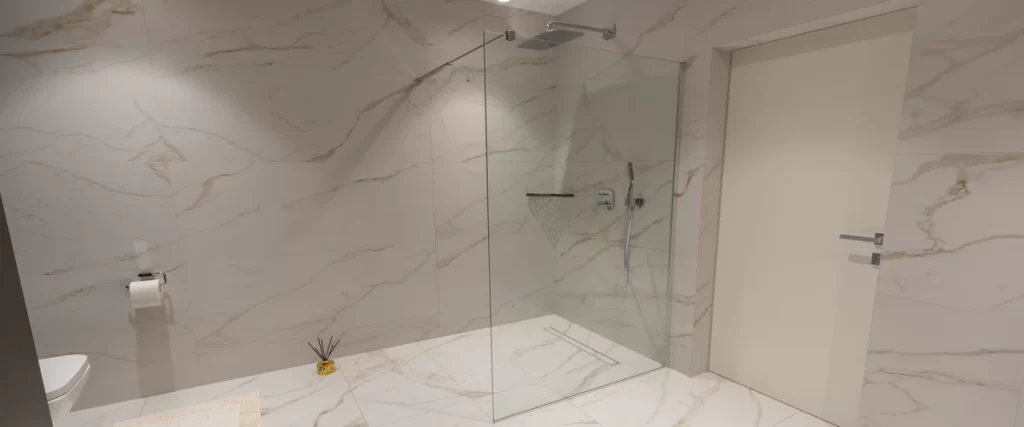
Your old tub is taking up half your bathroom, and honestly, when was the last time you actually took a bath? If you’re like most homeowners, you step into that tub area every single day just to take a shower anyway. So why not transform it into the walk-in shower you’ve always wanted?
Knowing how to convert a bathtub to a shower isn’t just about ripping out an old fixture and calling it a day. It’s a renovation that can completely change how you use your bathroom space, boost your home’s value, and give you that dream shower you scroll past on social media.
Let’s walk you through exactly what this bathroom conversion looks like.
Planning Your Shower Conversion
Before you grab any tools or start demolition, you need a solid plan. This isn’t the type of project where you figure things out as you go.
First, measure your tub area carefully. Most standard bathtubs sit in a 60-inch alcove, which gives you plenty of room to create a spacious shower. But you’ll want to know the exact distance from wall to wall, floor to ceiling, and where your existing drain and plumbing lines are located.
Your local building department will have specific requirements as well. Some municipalities require inspections for plumbing work. The EPA’s WaterSense program also offers guidelines for water-efficient showerheads that can help you save money in the long term.
Think about storage, too. Where will your shampoo sit? Built-in niches look way better than those hanging caddies.
Removing Your Old Tub
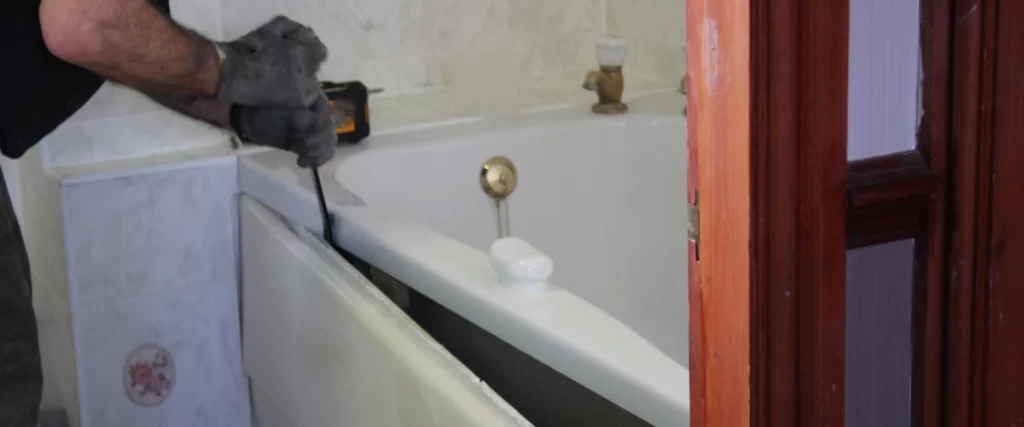
Now we get to the fun part: demolition. Here’s the right way to do this:
- Shut off the water to your bathroom. You’d be surprised how many people skip this step and regret it immediately.
- Remove all fixtures. Take off the shower head, faucet handles, and drain assembly from your existing tub.
- Protect your bathroom. Cover your floors with drop cloths and your toilet with cardboard. You don’t want to crack anything during removal.
- Remove the tub. Cast iron tubs are incredibly heavy, sometimes you need to break them into pieces to get them out.
- Demo the surrounding tile. This gets messy, so wear safety glasses and a dust mask. Sometimes the tile comes off in satisfying big chunks. Other times, you’re chipping away bit by bit.
Once the tub is out, you’ll probably find some interesting things behind those walls. Water damage is common, especially around the faucet and drain areas.
Don’t panic, this is actually the perfect time to fix it. Replace any rotted studs, damaged subfloor, or questionable plumbing before you move forward.
Installing Your New Shower
With your bathroom stripped down to the studs, you can finally install that new shower.
- Install the shower drain first. If you’re lucky, you can reuse the existing drain location. If not, a plumber will need to reroute the plumbing, which adds to your cost but gives you more flexibility with your layout. Make sure the drain slopes correctly so water doesn’t pool in your shower.
- Set your shower base or pan. Prefab acrylic bases are popular because they’re affordable and easy to install. Tile bases give you more design freedom but require a mortar bed and waterproof membrane, which is more complicated.
- Build up the walls. Cement board is standard for tile installations because it won’t rot when wet. Prefab shower wall panels are faster to install and completely waterproof right out of the box. Pick what fits your timeline and skills.
If you’re tiling, this is where things get real. You need to:
- Plan your tile layout so cuts end up in the least visible corners
- Use spacers to keep your lines straight
- Waterproof everything properly (according to the Tile Council of North America, this is the most important step in any tile shower installation)
Don’t forget a window if you have one. You might need to reframe it or add new trim depending on your new wall thickness.
Adding Features and Fixtures to Your Walk-In Shower
Here’s where your shower goes from basic to amazing:
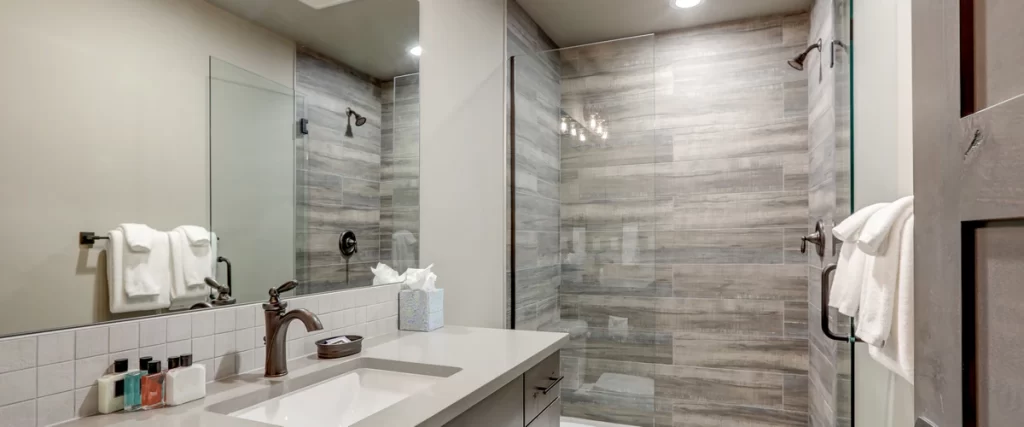
- Showerhead installation: Install your showerhead at a comfortable height. Most people put them around 80 inches from the shower floor, but adjust based on who’s using it. Handheld shower heads are great if you have kids or need flexibility. Some people install both a fixed head and a handheld, connected to a diverter valve.
- Safety features: Grab bars aren’t just for older folks. They’re smart planning for anyone who wants to age in place or just have something sturdy to hold onto. Mount them into wall studs, not just drywall, so they can actually support weight.
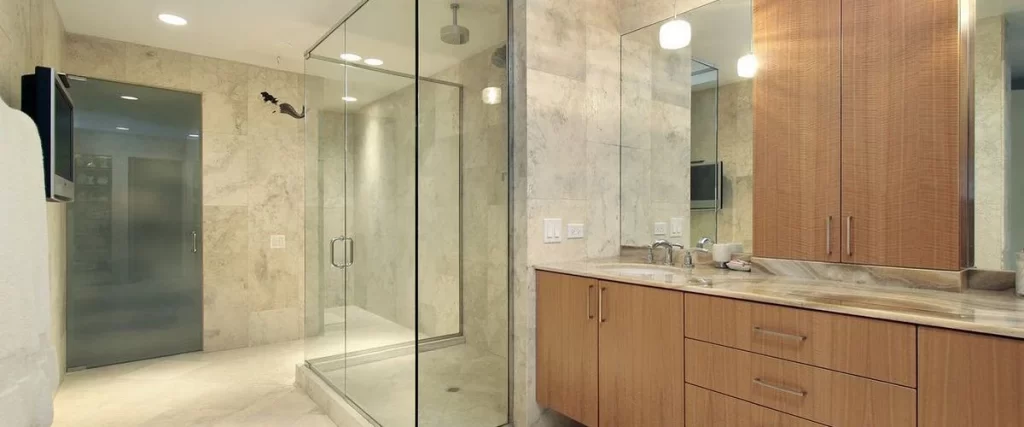
- Choose between a shower door or a curtain. Glass doors look sleek and make your bathroom feel bigger. They require a bit more maintenance to keep clean, but they’re worth it. Curtains are cheaper and easier to replace if you want to update your style down the road.
Other features to consider:
- Recessed ceiling lights rated for wet locations make everything easier, from shaving to finding that dropped bar of soap
- Built-in shelving or niches give you space for your products without cluttering up the shower
- Shower benches for comfort and accessibility
- Multiple shower heads for a spa-like experience
Figure out where you’ll actually use these features before you install. Trust us on this: you don’t want shelves at ankle height.
Finishing Touches That Matter
The small details make your bathroom conversion feel complete:
- Caulk every seam where water could potentially sneak through. Use 100% silicone caulk designed for bathrooms. It resists mold better than cheaper options. Run a smooth bead and tool it with your finger or a caulk tool for a professional look.
- Grout all your tile joints if you went that route. Seal the grout after it cures so water beads up instead of soaking in.
- Test everything before you call it done. Turn on the water and check for leaks around the showerhead, faucet, and drain. Stand in the shower and make sure water drains quickly without pooling.
- Clean up thoroughly. Your new shower deserves to shine. Make sure to get rid of all that construction dust and debris.
If you find any issues at this stage, it’s better to fix them now than during your first shower. This simple maintenance step prevents mold and keeps your tile looking new for years.
How to Convert a Bathtub to a Shower FAQs
How much does it cost to convert a bathtub to a shower?
Most homeowners spend between $3,000 and $10,000 on a tub-to-shower conversion. The price depends on whether you choose a prefab unit or custom tile, if you need to relocate plumbing, and what features you add. Labor typically makes up about half the cost.
Can I convert my tub to a shower myself?
You can handle some parts of the conversion if you’re handy, like demolition and painting. But plumbing work and waterproofing really should be done by professionals. One mistake with waterproofing can lead to thousands in water damage repairs later.
How long does a bathtub-to-shower conversion take?
Expect about 3-5 days for a straightforward conversion with a prefab unit. Custom tile showers can take 1-2 weeks because you need time for the mortar and grout to cure properly.
Will removing my bathtub hurt my home’s resale value?
If you have other bathrooms with tubs, converting one to a shower is usually fine. But if it’s your only bathroom, keeping a tub might be better for families with young children. Talk to a local real estate agent about what makes sense in your market.
Do I need a permit to convert my tub to a shower?
Most areas require permits for plumbing work and modifications to your bathroom. Check with your local building department before starting. Permits typically cost $50-$200, and inspections make sure everything is safe and up to code.
Let the Professionals Handle It
Why stress about drain slopes, waterproof membranes, and whether your grout lines are straight? At Gill Construction, we’ve done bathroom conversions more times than we can count.
We know exactly how to handle your specific bathroom layout, we’ve got all the right tools, and we can finish in days instead of weeks. Ready to get that dream shower without the headache? Call us at (254) 369-5978 or message us here.