Your bathroom might be small, but it doesn’t have to feel that way. Knowing how to make a small bathroom feel bigger is mostly about working with perception: light, lines, and layout.
A few smart changes can go a long way, and you don’t always need a full gut renovation to see a real difference.
There are proven design strategies that transform tight spaces into something that actually feels open and comfortable. Here are 10 of them.
1. Go Big With Your Tiles
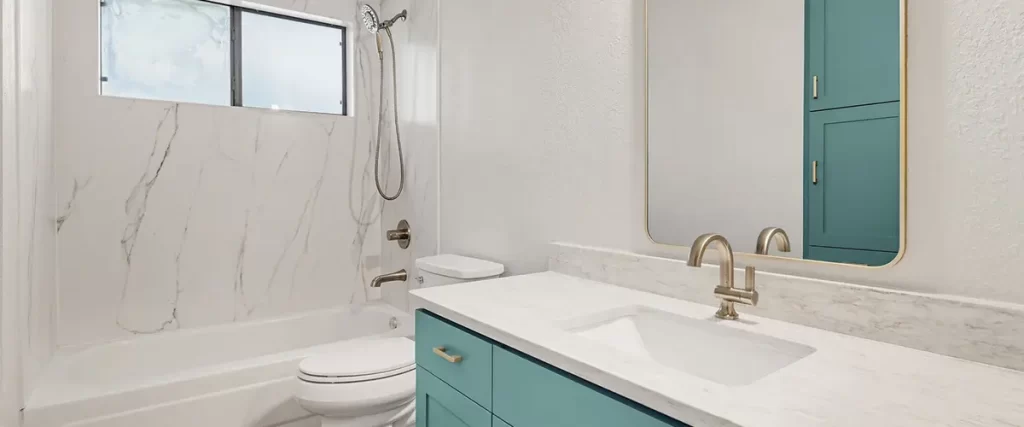
This one surprises a lot of people. Large-format tiles (we’re talking 24×24 or larger) actually work better in small bathrooms than small tiles.
When you use smaller tiles in large quantities, you end up with a labyrinth of grout lines that can feel busy and overwhelming in a compact space. Large-format tiles have far fewer grout lines, resulting in a more streamlined, spacious feel.
The clean, uninterrupted surfaces of large tiles draw the eye across a wider expanse, making the bathroom feel more open and airy. Match the grout color to the tile color, and those lines practically disappear.
2. Stick to Light Colors
Dark colors absorb light. Light colors reflect it. It really is that simple.
Soft whites, warm creams, and pale grays bounce light around the room, making walls feel farther away than they are.
Light-colored tiles, such as white, beige, or light gray, reflect light, making a room appear brighter and more open. This is particularly beneficial in small bathrooms with limited natural light.
You don’t have to go all-white. A soft neutral palette with one or two complementary tones keeps things interesting without closing the room in.
3. Hang a Large Mirror (or Two)
If there’s one thing that punches above its weight in a small bathroom, it’s a big mirror.
Large mirrors reflect light, add depth, and create the illusion that the room extends beyond the wall. A mirror that spans most of the vanity wall is a classic move for a reason.
Want to take it further? Try a mirrored medicine cabinet. You get extra storage and a reflective surface at the same time. Two problems solved.
4. Swap the Shower Curtain for Glass
A shower curtain visually divides the bathroom in half. Your eye hits the curtain, and the room stops there. A glass shower enclosure, even a simple frameless panel, lets the eye travel to the back wall.
Frosted glass is a great option if you want some privacy. Either way, the visual space opens up considerably compared to a fabric curtain.
5. Install a Floating Vanity
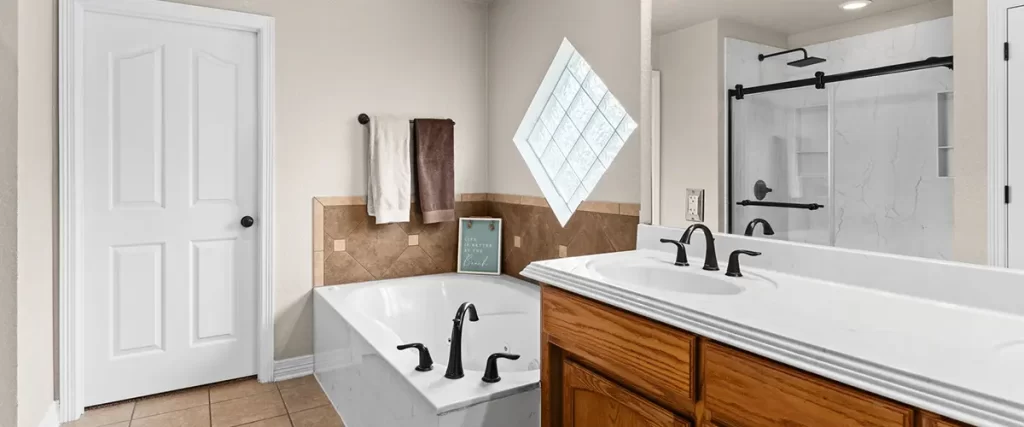
Wall-mounted fixtures and floating vanities do something clever: they reveal the floor. When you can see more of the bathroom floor, the room feels bigger.
That exposed floor space signals openness, even if the actual square footage hasn’t changed at all.
Floating vanities also make cleaning easier. That’s a genuine bonus.
6. Use Vertical Space for Storage
Floor space is precious in a small bathroom. Instead of taking up more of it with freestanding storage, go up.
Floating shelves on an empty wall, a tall, narrow cabinet, towel hooks instead of a towel bar—these vertical storage options keep things organized without crowding the floor.
The goal is to get everything off the surfaces and out of the open. Visual clutter makes a small space feel even smaller.
7. Maximize Natural Light
Natural light is one of the most powerful tools in a small bathroom. If your bathroom has a window, make sure nothing is blocking it.
Skip heavy window treatments and use frosted glass or a solar shade instead. You’ll get privacy without sacrificing daylight.
No window? It’s worth considering adding one during a renovation. Even a small one makes a real difference.
8. Keep the Tile Consistent From Floor to Wall
Here’s a tip that interior designers love: run the same tile from the bathroom floor up the walls. This eliminates visual breaks, creating a seamless, continuous surface. Your eye reads it as one large expanse rather than a series of separate planes.
Extending tiles from floor to ceiling or across multiple walls can eliminate visual breaks, which enhances the illusion of a larger, more cohesive space.
This technique works particularly well with large-format tiles, creating uninterrupted surfaces that draw the eye smoothly throughout the room.
9. Consider a Sliding Door
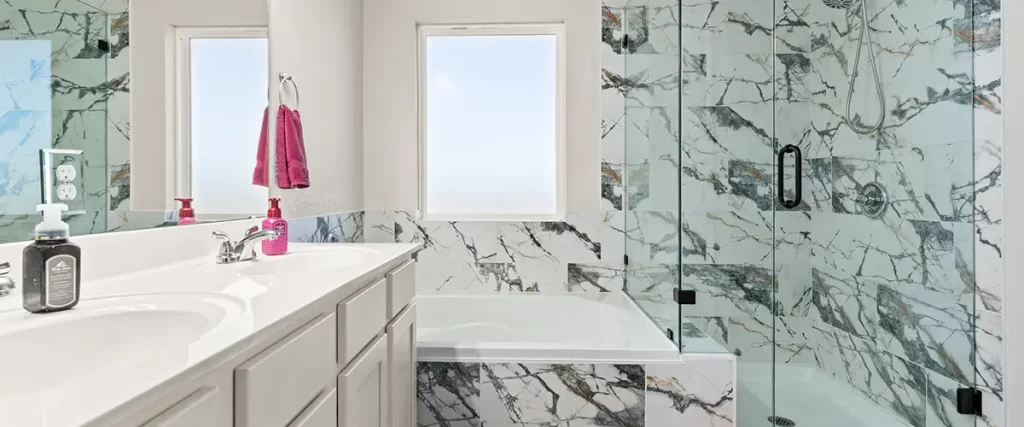
Standard hinged doors eat up floor space. Every time the door swings open, it takes up real estate you don’t have. A pocket door slides into the wall, freeing up floor space and making movement in and out of the bathroom much easier.
It’s a bigger project, but the payoff in usable space is significant, especially in narrow bathrooms.
10. Replace the Toilet and Sink With Wall-Mounted Versions
Wall-mounted toilets and sinks don’t sit on the floor. That means more visible tile, more open floor space, and cleaner sightlines throughout the room.
These fixtures also give the bathroom a clean, modern look that pairs well with the rest of the upgrades on this list.
How to Make a Small Bathroom Feel Bigger Without a Full Renovation
Not every tip on this list requires tearing out tile and starting from scratch.
Swapping a shower curtain for glass, adding a large mirror, painting the walls a lighter shade, or putting up floating shelves are all changes you can make without a full bathroom renovation.
But if your bathroom needs more than a cosmetic refresh, a proper remodel gives you the chance to address everything at once: layout, fixtures, tile, storage. That’s where the real transformation happens.
The team at Gill Construction works specifically with Bell County homeowners on this kind of project, helping clients determine which changes will make the biggest visual impact for their space and budget.
FAQ: Small Bathroom Design Questions, Answered
Does painting a small bathroom a dark color make it look smaller?
Generally, yes. Dark colors absorb light and tend to make walls feel closer together. Light colors reflect more light and visually open up the space. That said, a well-placed dark accent wall can add depth without shrinking the room, as long as the rest of the space stays light.
Do large tiles really work in a tiny bathroom?
They do, and most people are surprised by how much. Fewer grout lines mean a cleaner, more open surface for the eye to travel across. The key is keeping the color light or neutral and matching the grout to the tile so the lines blend in.
What’s the best mirror size for a small bathroom?
As big as your wall space reasonably allows. A mirror that spans the full width of the vanity or close to it will reflect the most light and create the strongest sense of depth. A medicine cabinet with a mirrored front is an even smarter choice if storage is tight.
Is a glass shower worth it in a small bathroom?
Absolutely. It’s one of the single most effective upgrades you can make in a compact bathroom. Even a simple frameless glass panel opens the room up more than any shower curtain ever will.
Can I make my bathroom feel bigger without spending a lot?
Yes. A large mirror, a lighter paint color, clearing out surface clutter, and adding a few floating shelves are all low-cost moves that genuinely shift how the space feels. For bigger gains, tiles, fixtures, and glass upgrades make the most difference.
Ready to Stop Working Around a Small Bathroom?
If you’d rather hand it off to someone who does this every day, call us at or message us here. Gill Construction has been helping Central Texas homeowners get bathrooms they actually enjoy using, and a small bathroom can feel completely different when it’s designed right.