Walk-in shower ideas have exploded in popularity over the last decade, and for good reason. They open up space, modernize the look of any bathroom, and once you’ve had one, going back feels impossible.
This article covers everything from layout choices and tile styles to lighting, storage, and design details that make a real difference. Whether you’re working with a cramped guest bath or a generous master bathroom, there’s a configuration here that fits.
Why Walk-In Showers Keep Winning
The appeal isn’t just visual. Removing the bathtub or swapping out a curtain-and-rod setup for a frameless glass enclosure instantly makes the entire bathroom feel larger.
Light flows through. The room breathes.
There’s also the practical side. No more shower curtains collecting mildew. No grout lines hidden under a tub lip. Walk-in showers are simply easier to clean and maintain over time.
For homeowners planning a long-term remodel, they’re a smart investment. Buyers consistently favor modern bathrooms, and a well-executed walk-in shower is one of the fastest ways to add appeal and resale value.
1. Match Your Shower To Your Bathroom’s Layout
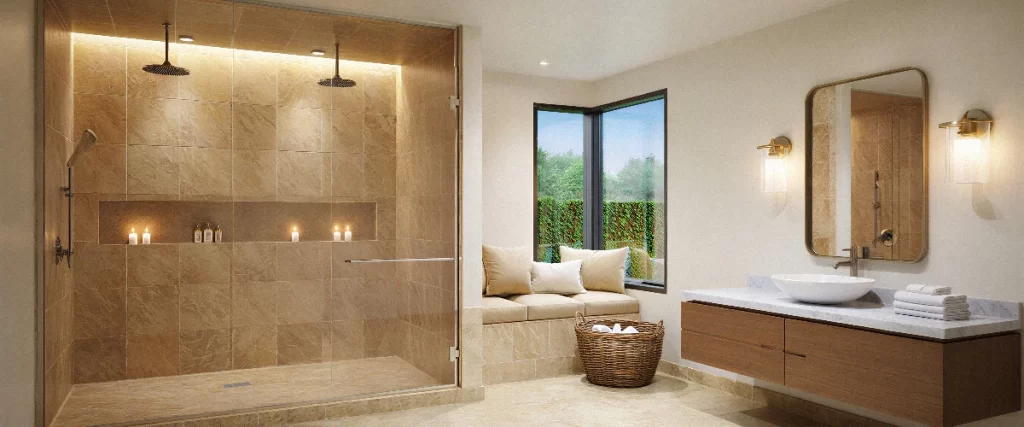
Before picking tiles or fixtures, think about the layout. The configuration you choose should match how the room actually functions.
- Doorless entry (wet room style): Great for larger bathrooms where splashing isn’t a concern. The open design creates a spa-like feel and works especially well with good lighting and a dedicated drain zone.
- Single glass panel: One wall of frameless glass separates the shower area without fully enclosing it. This is one of the most popular choices for small bathrooms because it keeps sightlines open.
- Corner enclosure: If floor space is tight, tucking the shower into a corner is efficient. A corner layout uses two existing walls, which can save money on materials during installation.
- Walk-in alcove: Three walls and no door. Clean lines, easy access, and a truly minimalist aesthetic. These work beautifully when the shower head placement is thoughtful and a built-in bench is included on one side.
2. Choose Tile That Makes a Difference
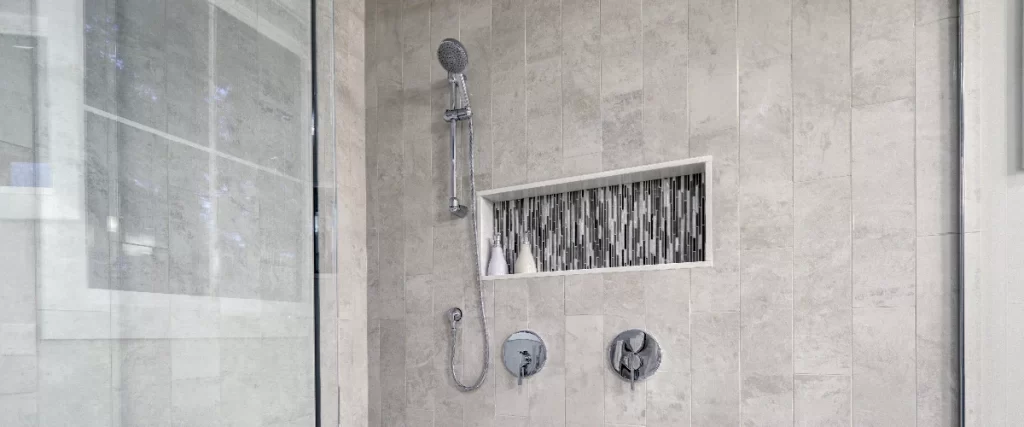
Tile is where most homeowners spend the most time deciding, and rightfully so. It sets the entire tone.
- Large-format tiles are having a moment right now. Fewer grout lines mean a sleeker look, and the visual continuity makes a small bathroom feel bigger. They work well on both the floor and shower walls.
- Natural stone (like marble, slate, or travertine) adds texture and warmth. It photographs beautifully and ages gracefully. Just be aware it requires sealing to prevent water damage over time.
- White tiles are a classic for a reason. They reflect light, keep the space feeling airy, and pair with almost every fixture style. Subway tiles, penny tiles, and large white slabs all hit differently depending on your overall direction.
- Patterned tiles deserve a special mention. A statement wall behind the shower head, covered in geometric or encaustic tile, creates a focal point without overwhelming the rest of the bathroom. Just keep the surrounding walls simple.
3. Glass Doors and Enclosures
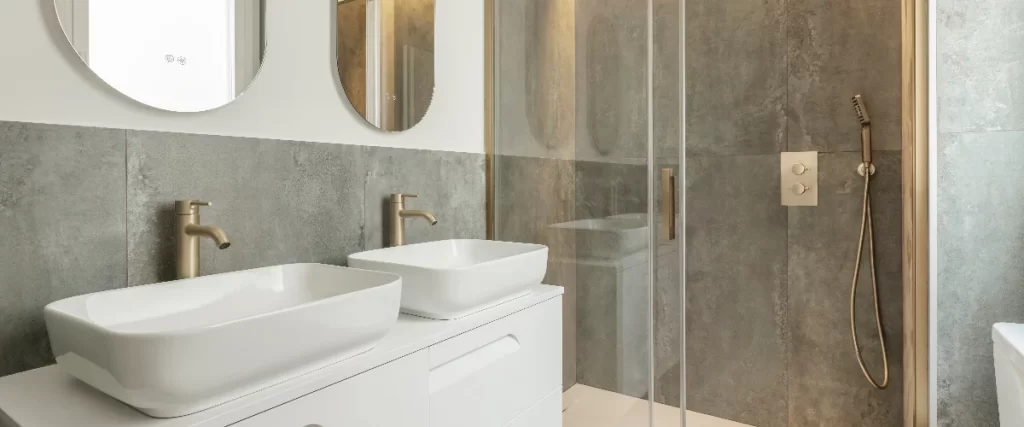
Frameless glass is the gold standard for walk-in shower design. It’s clean, modern, and lets natural light move freely through the space.
Clear glass is the most popular choice. It maximizes the open feel and makes the tile the star of the show. Frosted or textured glass is a good alternative when privacy is a priority, particularly in shared bathrooms.
One thing to consider: frameless glass enclosures cost more upfront than framed versions, but they’re a long-term solution. No metal frames means no rusting, no corrosion, and far less maintenance.
If budget is tight, a single fixed glass panel (sometimes called a wet wall or splash panel) gives you most of the visual benefits of a full-frameless enclosure at a fraction of the price.
4. Shower Walls Beyond Tile
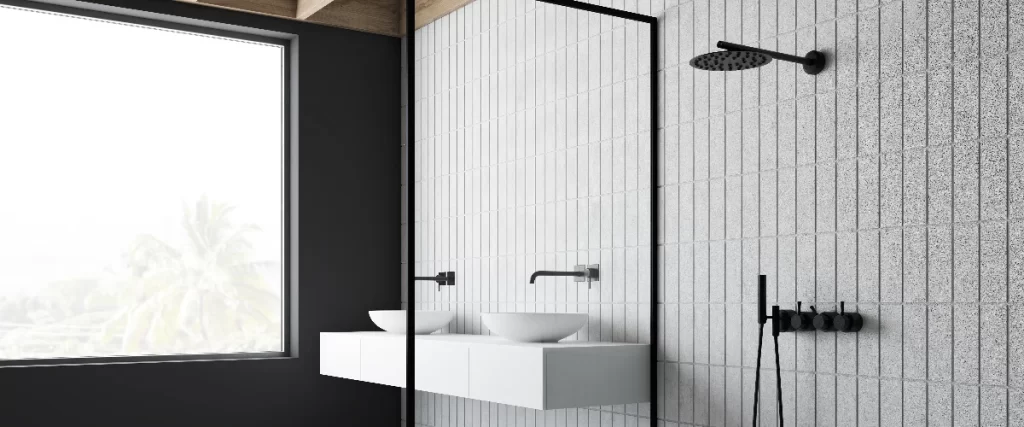
Tile is the default, but it’s not the only option.
Wall panels made from acrylic, PVC, or solid surface materials are growing in popularity, especially for homeowners who want to avoid grout entirely.
These panels install directly over existing walls in many cases, which cuts down on demo work. They’re seamless, waterproof, and come in a range of finishes, including looks that closely mimic natural stone.
For a truly high-end result, some homeowners opt for book-matched slabs of stone or porcelain that run floor-to-ceiling on one wall.
It’s a premium materials choice, but the aesthetic appeal is hard to beat.
5. Lighting, Natural Light, and Skylights
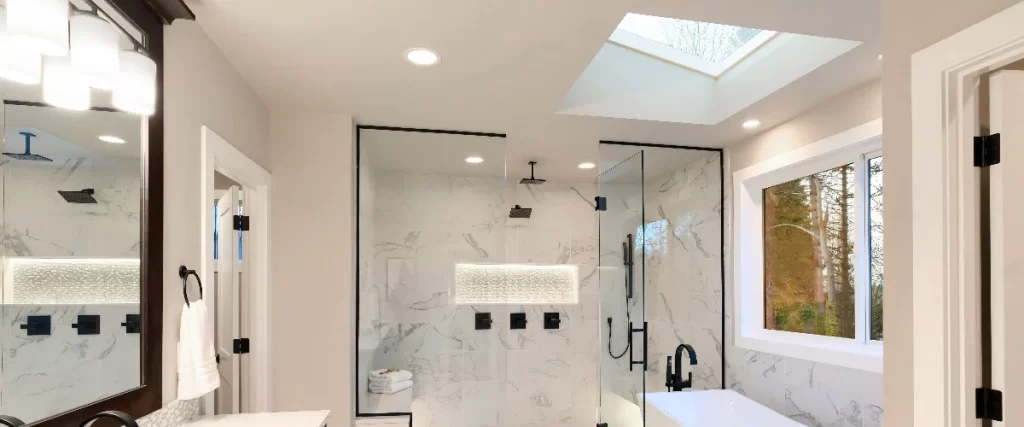
Lighting makes or breaks a shower remodel. A beautiful tile job loses half its impact in a dim, yellow-toned space.
Recessed ceiling fixtures are the baseline. Pair them with a dimmer switch, and you’ve got flexibility for different moods and times of day. For the shower area specifically, make sure any fixture used is rated for wet locations.
If the layout allows, a skylight above the shower is a game-changer. Natural light from above illuminates the tile in a way that artificial lighting simply can’t replicate.
Windows in the shower area are another option. Frosted or obscure glass keeps privacy intact while still letting daylight flood the space.
6. Built-In Storage and Functional Details
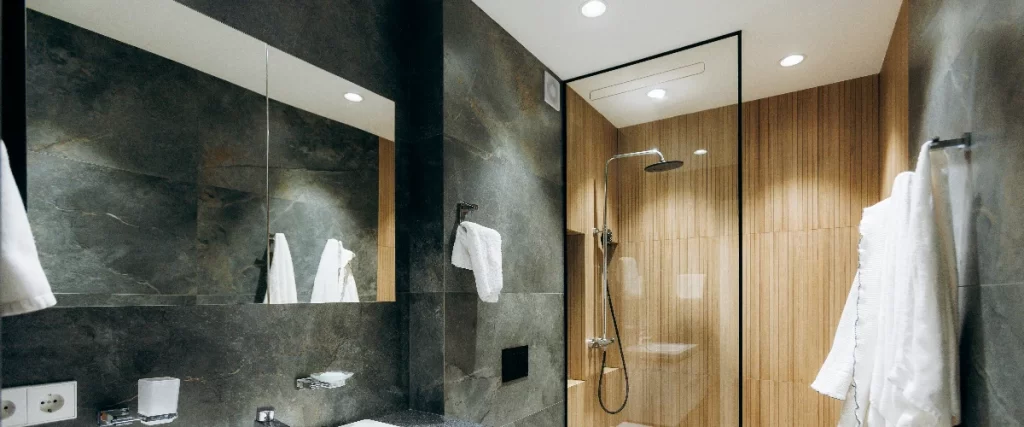
A walk-in shower looks best when it’s uncluttered. The way to get there is through thoughtfully built-in storage.
Recessed niches in the wall are the most popular solution. A single niche above waist height on a side wall keeps shampoo and soap accessible without adding visual noise. Two smaller niches work better than one oversized one in most cases.
A built-in bench pulls double duty. It’s useful for shaving, for aging-in-place considerations, and it adds a finished, intentional look to the layout.
If you’re designing for accessibility or someone with limited mobility, a built-in bench combined with grab bars is worth prioritizing early in the planning process.
7. Walk-In Shower Ideas for Small Bathrooms
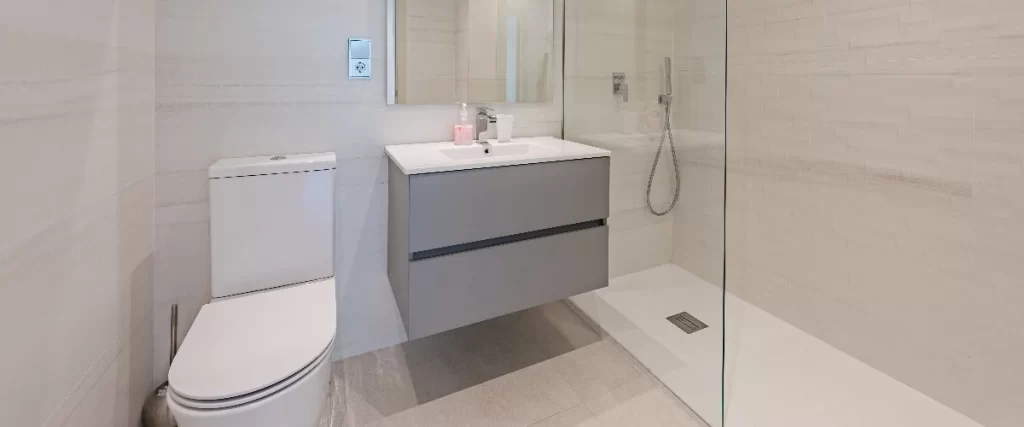
Small spaces can absolutely pull off a walk-in shower. The key is working with the room rather than against it.
- Use light colors throughout, including the floor, to visually expand the space.
- Choose large-format tiles to reduce grout lines and create a sense of continuity.
- Skip the door when possible. A doorless entry keeps compact spaces from feeling boxed in.
- Extend the tile from the shower floor through the rest of the bathroom floor. Removing visual breaks makes the room read as larger.
- Consider a shower-only layout in a secondary bathroom if a bathtub isn’t needed.
A single glass panel instead of a full enclosure is often the best call in a tight layout. It defines the shower area without closing off the rest of the room.
8. Connect the Shower to the Rest of the Bathroom
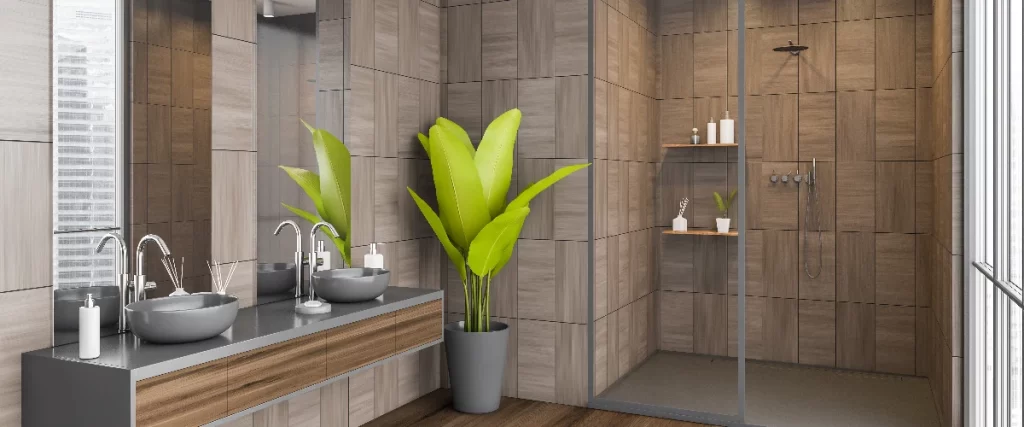
The shower should feel like part of the bathroom, not something dropped into it. Natural tones work well here because they read as warm and cohesive without demanding attention.
If your vanity areas feature wood tones or matte black fixtures, carry those finishes into the shower with coordinating hardware and shelf trim. Even small details like matching the finish on the shower head to the sink faucet pull the design together in a way that feels considered.
For a truly unified bathroom feel, extending the wall tile beyond the shower and onto an adjacent wall adds continuity.
It’s a subtle move that makes the entire bathroom feel designed rather than assembled.
Frequently Asked Questions
How much does a walk-in shower installation typically cost?
It varies quite a bit depending on size, materials, and whether demolition is involved. A basic installation might run $3,000–$5,000. A full custom build with natural stone and frameless glass can reach $15,000 or more.
Can I convert my existing bathtub into a walk-in shower?
Yes. Tub-to-shower conversions are one of the most common bathroom remodels. The existing plumbing usually stays in place, which keeps costs down.
What’s the minimum size for a walk-in shower?
Most building codes require at least 36 x 36 inches of interior shower space. In practice, 36 x 48 inches feels noticeably more comfortable, and 48 x 48 is a more generous standard.
Do walk-in showers work for aging in place?
They’re actually one of the best options. No threshold to step over, easy access, and room to add grab bars and a bench if needed. The Americans with Disabilities Act (ADA) outlines accessible design standards that are useful reference points for future-proofing a shower.
Are doorless showers hard to keep warm in winter?
They can lose heat faster than enclosed showers. Good placement of the shower head, a heated floor, and solid ventilation all help. Some homeowners add a low partition or glass panel without a door to strike a balance.
What’s the easiest tile to maintain in a walk-in shower?
Large-format porcelain tile with minimal grout lines is the easiest to clean. Wall panels are even lower maintenance since they’re completely grout-free.
Bring Your Walk-In Shower Ideas To Life
If you’re in the Killeen area and ready to make something happen in your bathroom, the team at Gill Construction can take the whole project off your plate. Call us at or message us here, and let’s talk through what you have in mind.